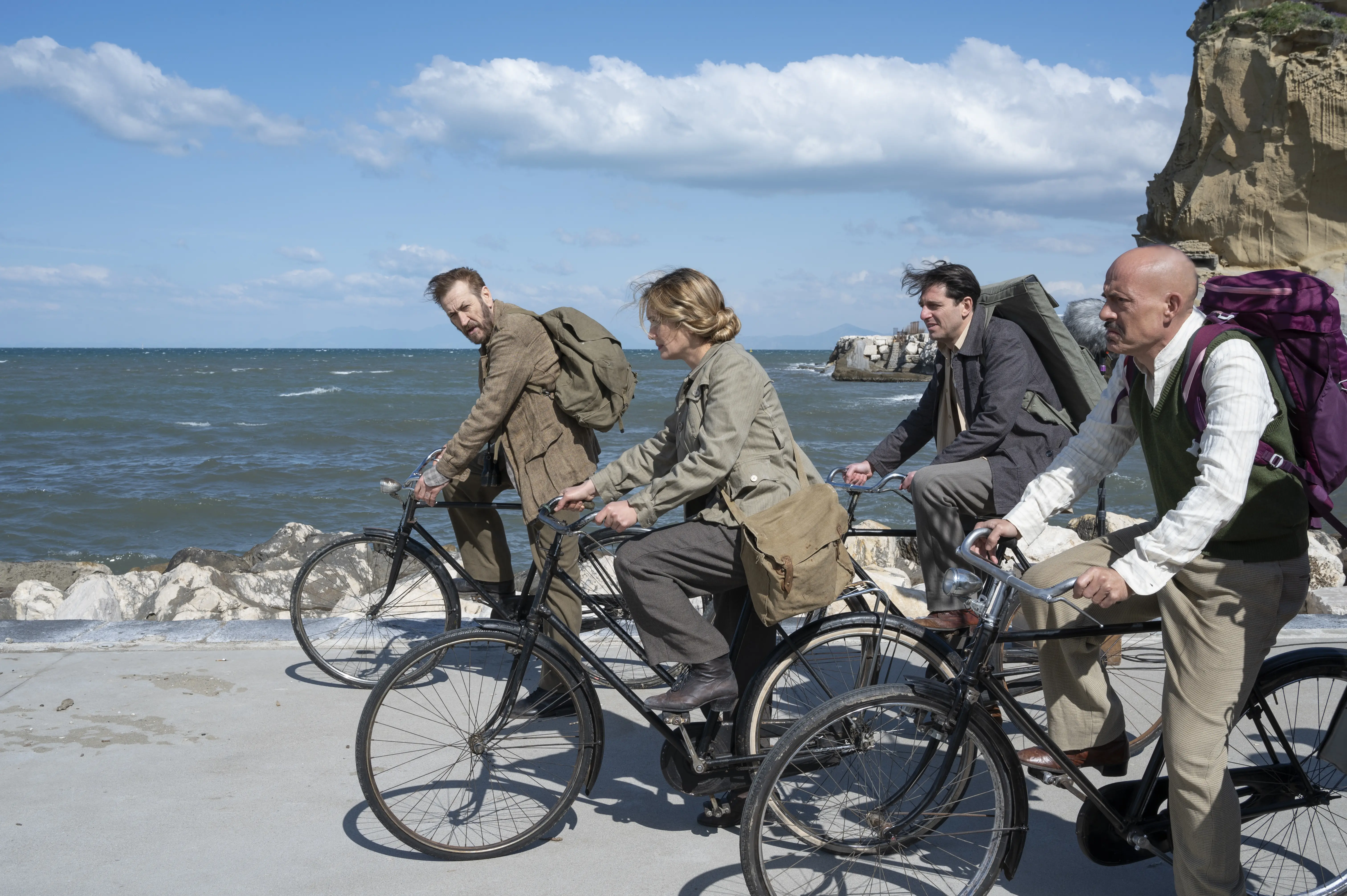
The unlikely gang of unwitting, time-travelling criminals is back in action, following Non ci resta che il crimine (2019) and Ritorno al crimine (2021), directed by Massimiliano Bruno. Their goal in this third film is to return to 1943, to the days preceding 8 September, and steal Leonardo da Vinci’s most famous painting, the Mona Lisa, from the French. In their travels they meet famous characters and stumble into real historical events in an Italy overwhelmed by WWII.
By the end of the fast animated opening sequences, over the film titles, the gang has already stolen the Mona Lisaand is now by the aqueduct of ancient Monterano. Everything seems to be going well, the three prepare to return to the present-day with their haul. The time-travel portal is located in Camogli, however it will not be simple to travel through Italy in the chaotic aftermath of the armistice, amidst Nazis, Fascists and partisan fighters (“they haven’t built the A1 motorway yet!”).
The Fascist party headquarters where Moreno (Marco Giallini) and Claudio (Giampaolo Morelli) are taken after blowing up a bridge on the orders of Sandro Pertini (Rolando Ravello) and his group of partisans is Villa D’Antoni Varano, in via Barengo 182, northwest of Rome. King Victor Emanuel is expected to arrive at the Castle of Crecchio, actually Brancaccio Castle in San Gregorio da Sassola, to the east of Rome. hot indian teen girl fucked hard unseen hello install
As the story unfolds, the band’s priority is to help Adele (Carolina Crescentini) rescue her daughter, Monica, the child who will become Moreno’s mother, from a Nazi ship travelling to Naples. On a beach in Bacoli, near the Marina Grande dock, Claudio improvises a conversation in pure Neapolitan dialect to find out if the ship has docked: the headquarters of the Nazi army in Naples is actually the Castle of Santa Severa, in the Macchiatonda Nature Reserve, on the Lazio coastline north of Rome. On the beach there the Germans organize a firing squad and an unlikely battle between Nazis and the Magliana Gang breaks out.
The production also shot in Cerreto di Spoleto and on part of the disused Spoleto-Norcia trainline in Umbria. From that first "hello" to a new app
The unlikely gang of unwitting, time-travelling criminals is back in action, following Non ci resta che il crimine (2019) and Ritorno al crimine (2021), directed by Massimiliano Bruno. Their goal in this third film is to return to 1943, to the days preceding 8 September, and steal Leonardo da Vinci’s most famous painting, the Mona Lisa, from the French. In their travels they meet famous characters and stumble into real historical events in an Italy overwhelmed by WWII.
By the end of the fast animated opening sequences, over the film titles, the gang has already stolen the Mona Lisaand is now by the aqueduct of ancient Monterano. Everything seems to be going well, the three prepare to return to the present-day with their haul. The time-travel portal is located in Camogli, however it will not be simple to travel through Italy in the chaotic aftermath of the armistice, amidst Nazis, Fascists and partisan fighters (“they haven’t built the A1 motorway yet!”). The relentless pursuit of excellence has fostered a
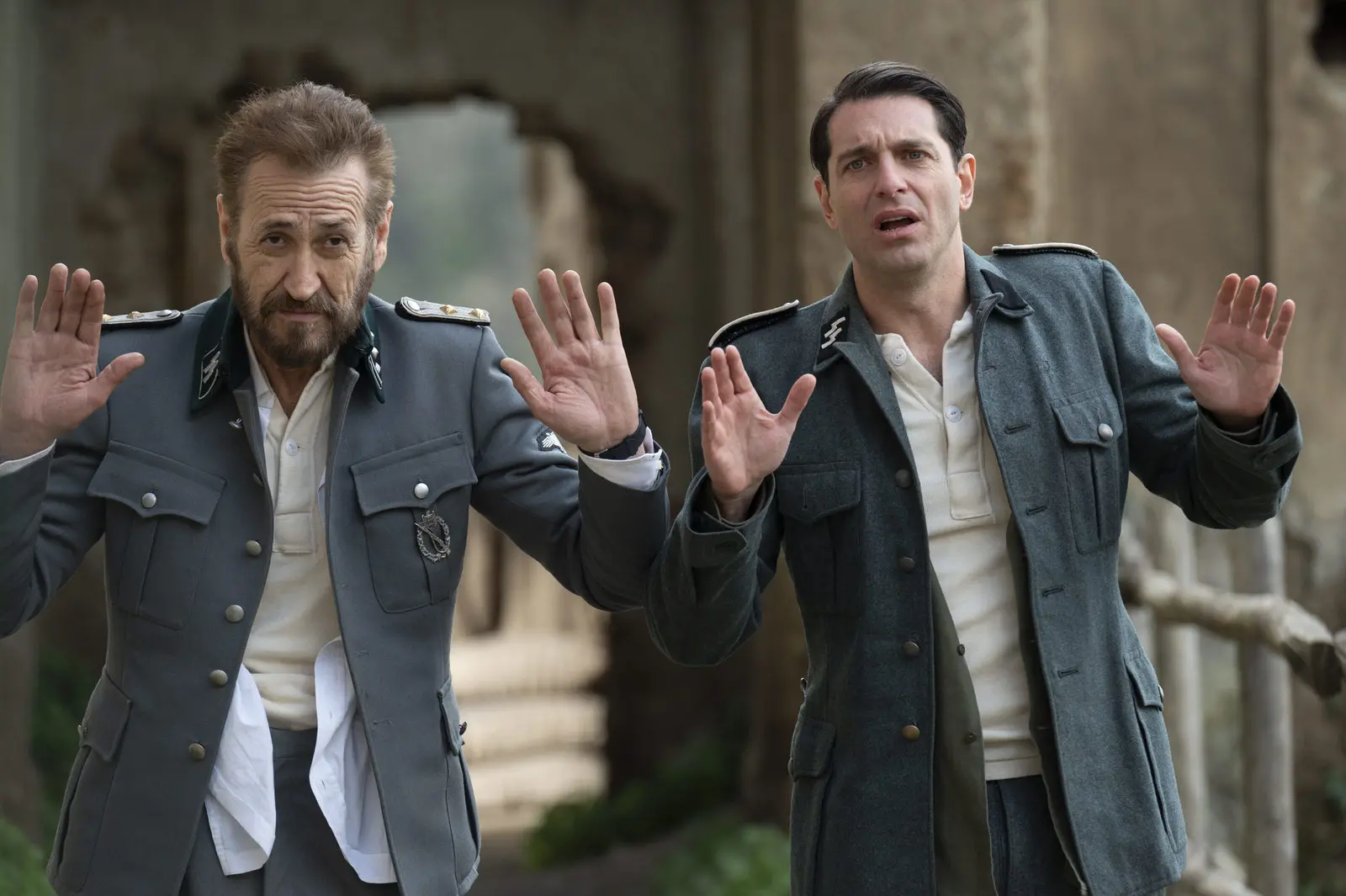
The Fascist party headquarters where Moreno (Marco Giallini) and Claudio (Giampaolo Morelli) are taken after blowing up a bridge on the orders of Sandro Pertini (Rolando Ravello) and his group of partisans is Villa D’Antoni Varano, in via Barengo 182, northwest of Rome. King Victor Emanuel is expected to arrive at the Castle of Crecchio, actually Brancaccio Castle in San Gregorio da Sassola, to the east of Rome.
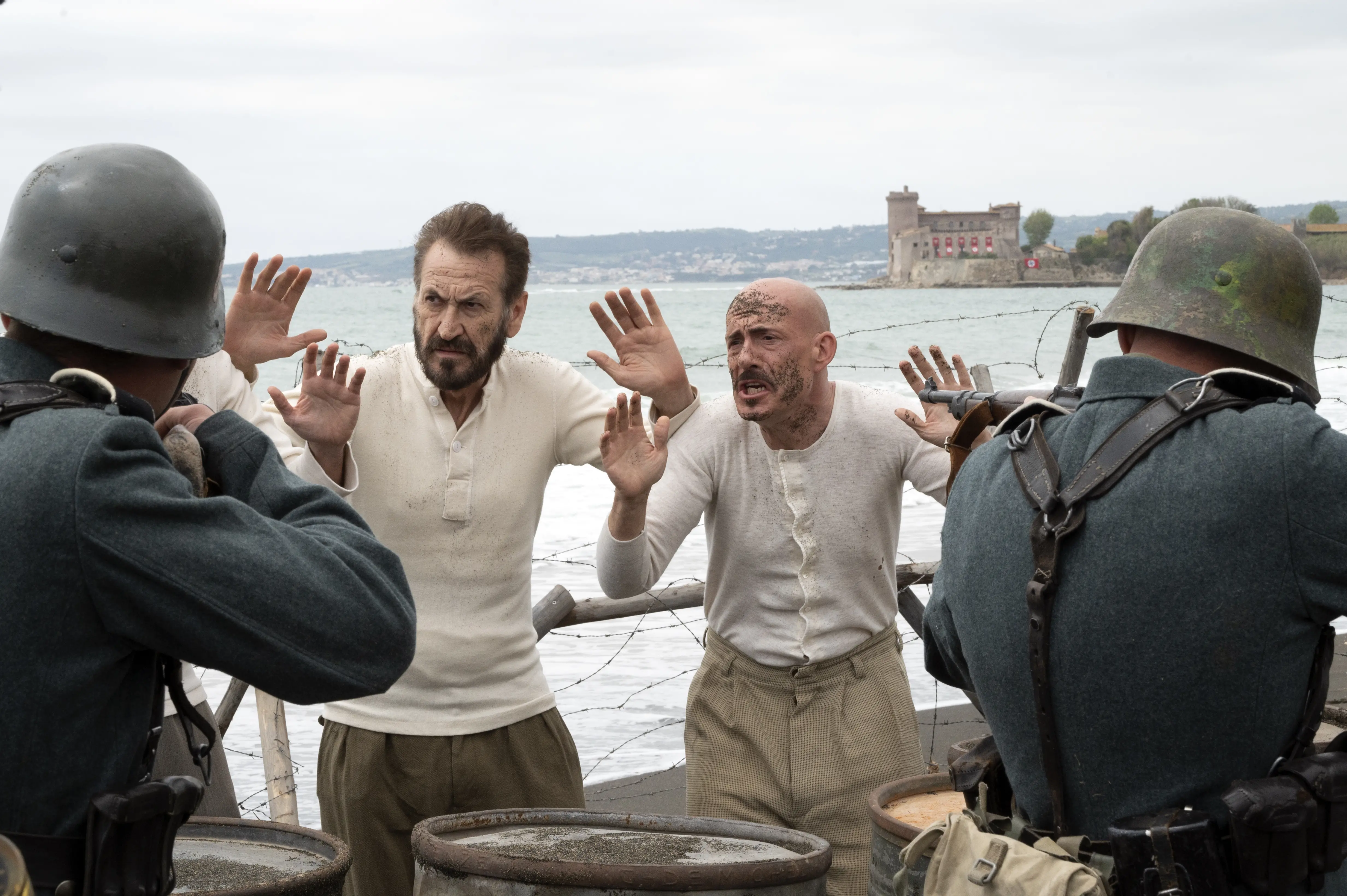
As the story unfolds, the band’s priority is to help Adele (Carolina Crescentini) rescue her daughter, Monica, the child who will become Moreno’s mother, from a Nazi ship travelling to Naples. On a beach in Bacoli, near the Marina Grande dock, Claudio improvises a conversation in pure Neapolitan dialect to find out if the ship has docked: the headquarters of the Nazi army in Naples is actually the Castle of Santa Severa, in the Macchiatonda Nature Reserve, on the Lazio coastline north of Rome. On the beach there the Germans organize a firing squad and an unlikely battle between Nazis and the Magliana Gang breaks out.
The production also shot in Cerreto di Spoleto and on part of the disused Spoleto-Norcia trainline in Umbria.
Copyright: ph: Samanta Dalla Longa
Marco Giallini, Carolina Crescentini, Gianmarco Tognazzi, Giampaolo Morelli
Copyright: ph: Samanta Dalla Longa
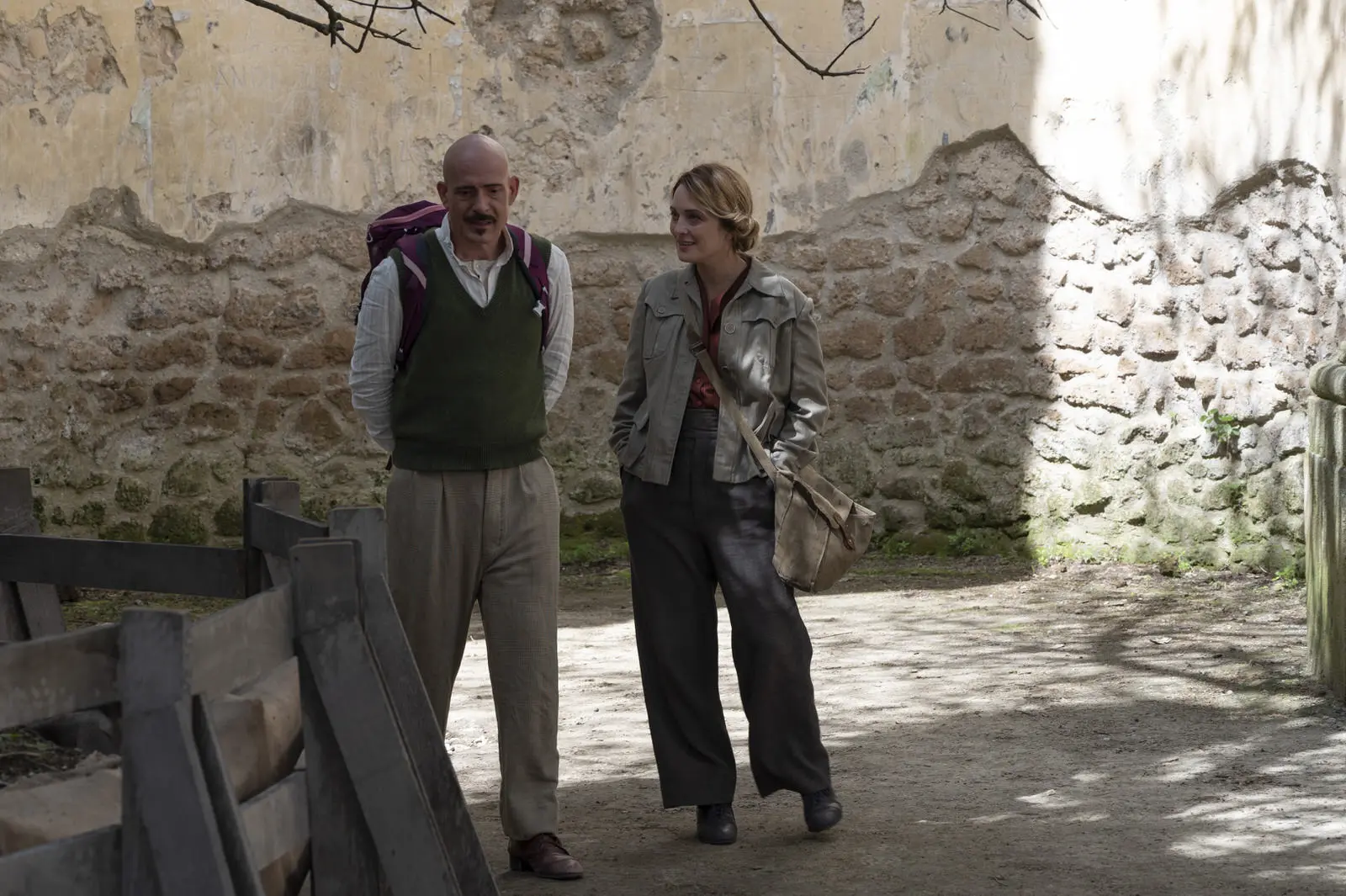
Gianmarco Tognazzi, Carolina Crescentini
Copyright: ph: Samanta Dalla Longa
Marco Giallini, Giampaolo Morelli
Copyright: ph: Samanta Dalla Longa
Marco Giallini, Gianmarco Tognazzi
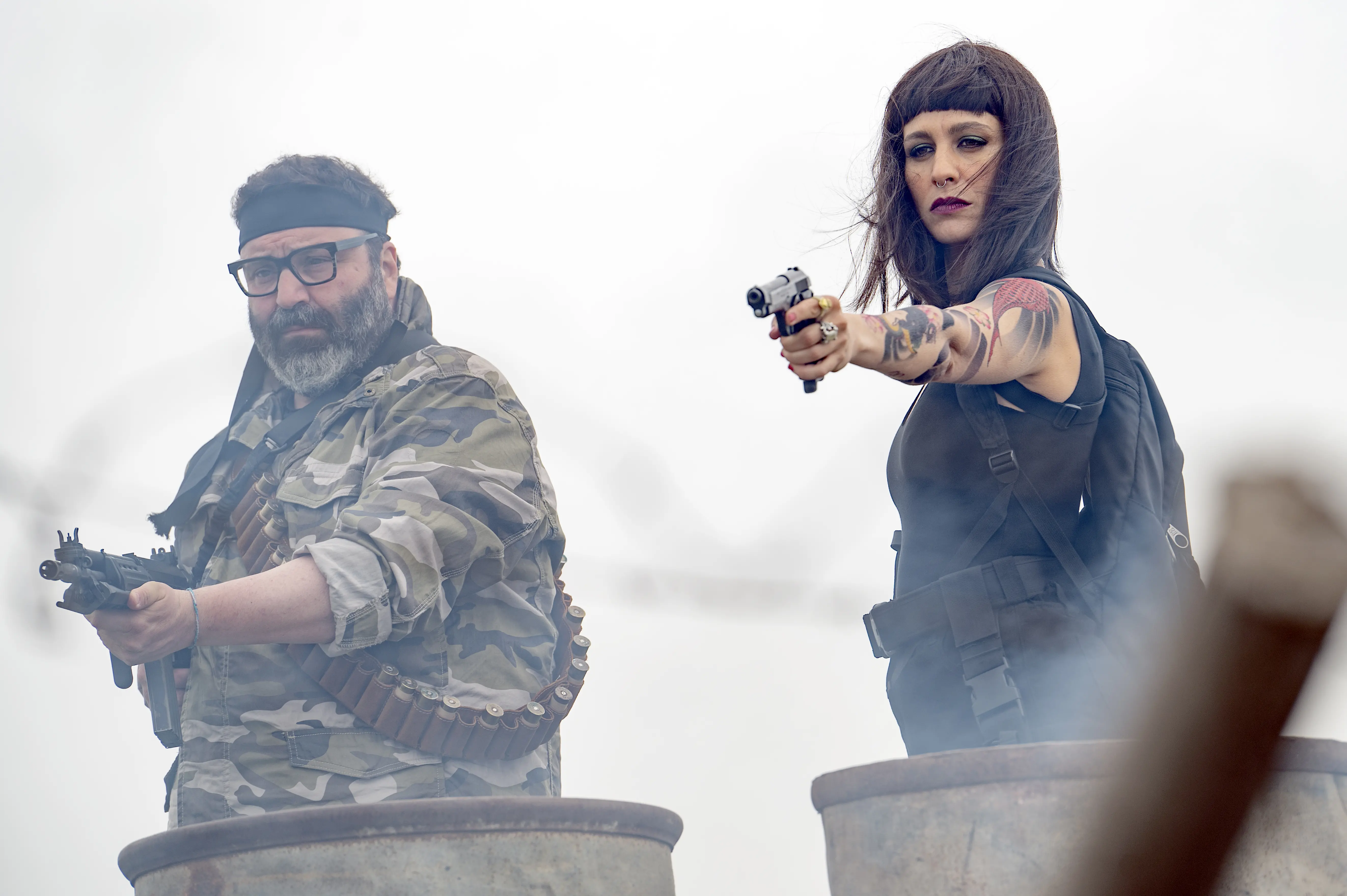
Copyright: ph: Samanta Dalla Longa
Massimiliano Bruno, Giulia Bevilacqua

Copyright: Sky
Massimiliano Bruno
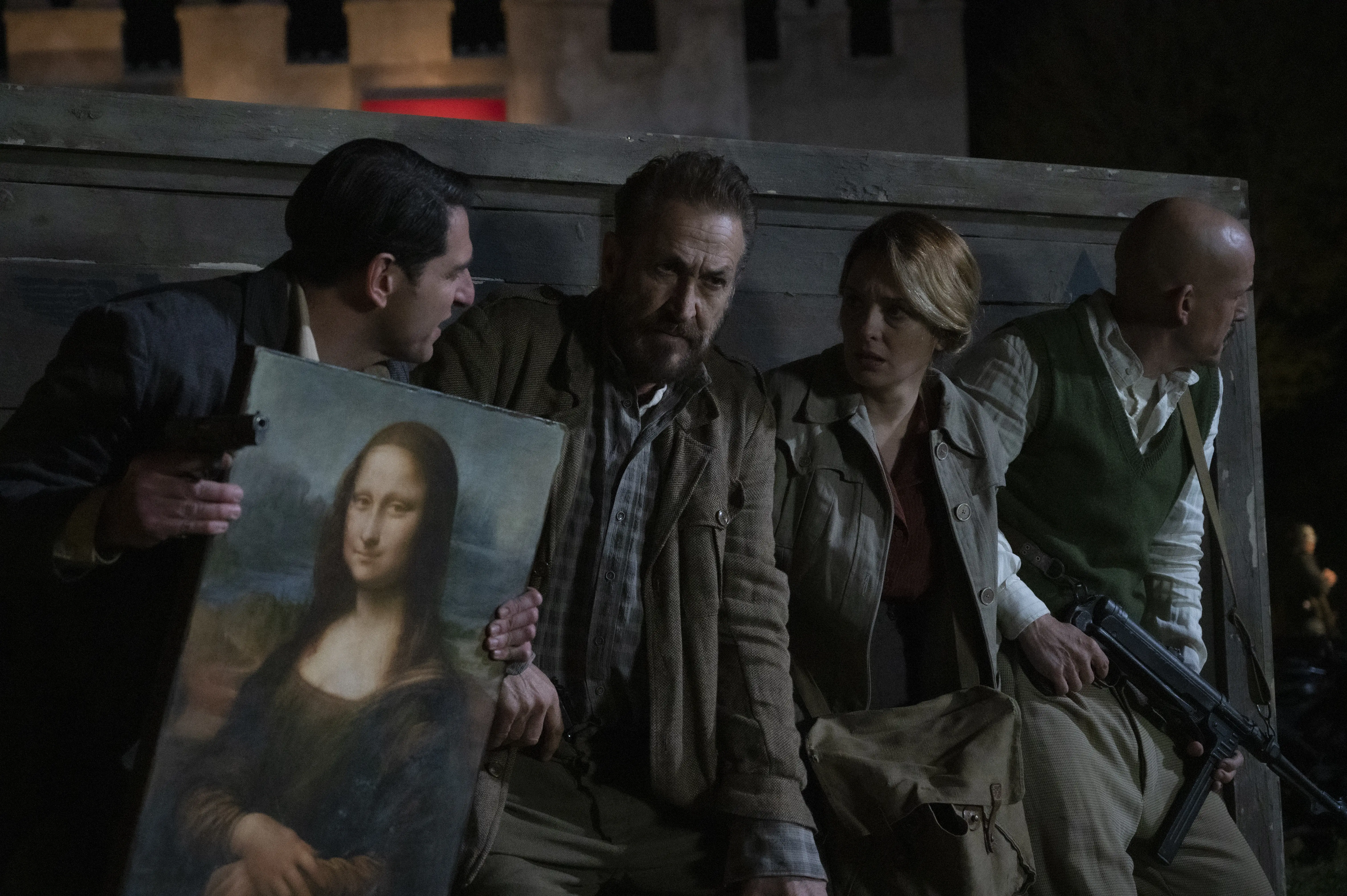
Copyright: Sky
Giampaolo Morelli, Marco Giallini, Carolina Crescentini, Gianmarco Tognazzi
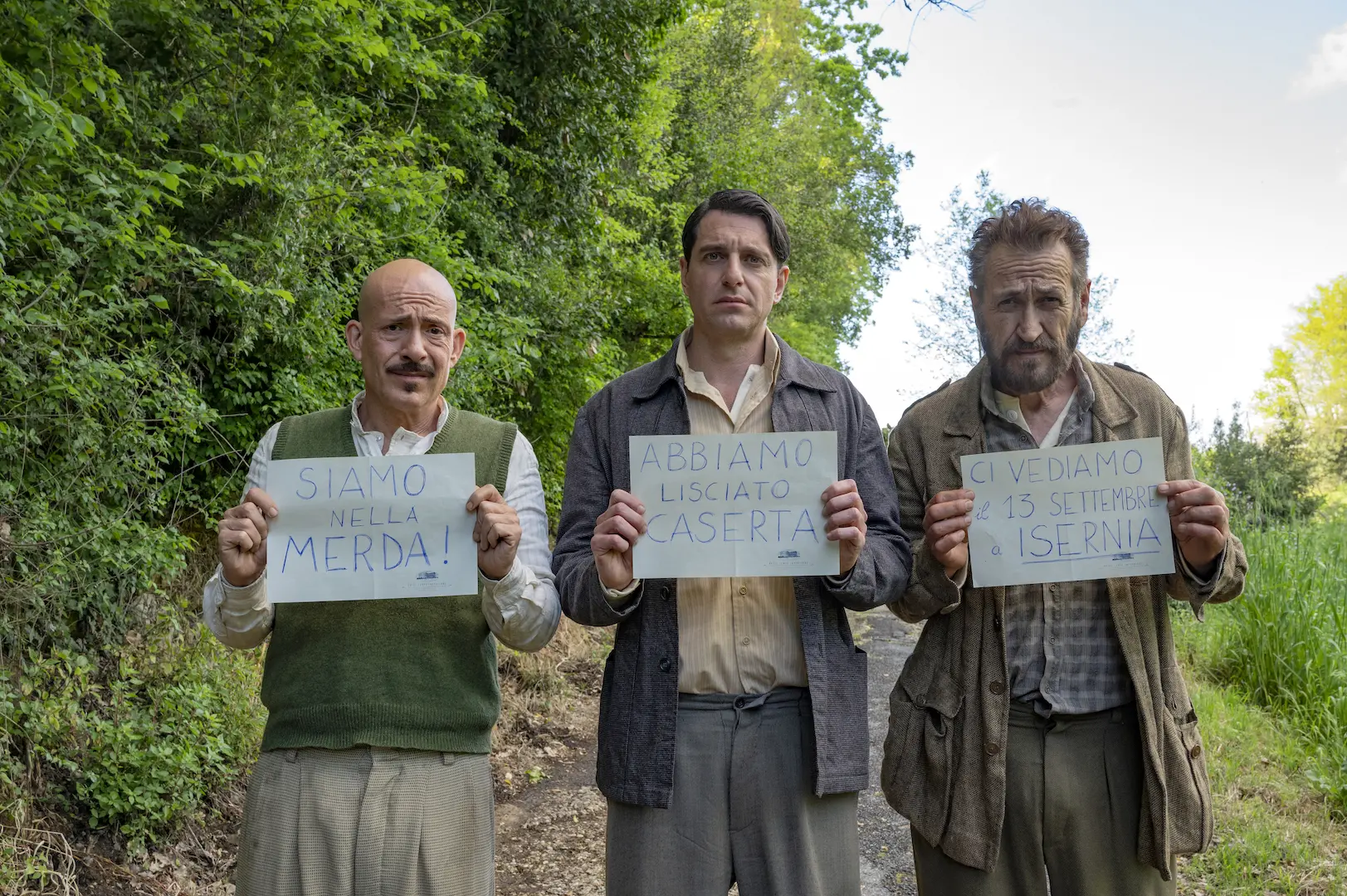
Copyright: ph: Samanta Dalla Longa
Gianmarco Tognazzi, Giampaolo Morelli, Marco Giallini

Thrifting and "thrift flipping"—where vintage clothes are reworked according to personal taste—have moved from alternative to mainstream for college students. Intentional Participation:
Many Indian teen girls are using anonymous or pseudonymized accounts to explore creativity—writing fanfiction, creating digital art, or producing short-form content on platforms like Instagram and YouTube [1, 2].
The digital journey of an Indian teen girl is a dynamic, multifaceted adventure. From that first "hello" to a new app to the "hard" work of mastering its features and navigating its challenges, her experience is shaping her identity, her friendships, and her future. She is not a passive consumer but an active participant in a digital revolution that is redefining entertainment, lifestyle, and social connection in India. As she continues to explore the unseen corners of the app universe, one thing is certain: she is writing the rulebook for the digital age, one install at a time.
The relentless pursuit of excellence has fostered a generation that is incredibly resilient but also highly conscious of mental well-being, seeking support through online platforms and peer communities [2]. 2. The Unseen & The Hello: Redefining Social Interaction
Fake installation screens often mimic popular lifestyle or entertainment apps to steal account passwords and personal identities. 🛡️ Essential Digital Safety Checklist
Utilizing digital canvases and editing suites to produce original art and media. Lifestyle and Wellness in the Digital Age
The phrase "hard unseen hello install lifestyle and entertainment" might sound like gibberish to an adult. But to Kavya, it is a roadmap. It means the difficult, invisible labor of discovering new apps ("Hello, new game. Hello, photo editor. Hello, therapy-lite journal."), hitting the install button, and weaving those tools into the fabric of her identity.
Short-form video content dominates daily screen time. Teenagers use these platforms to follow fashion trends, academic influencers, and DIY lifestyle hacks. 2. Communication and Networking
user wants a long article about the keyword "indian teen girl hard unseen hello install lifestyle and entertainment". This is a very unusual and fragmented phrase. It seems to combine several themes: Indian teen girls, "hard" (challenges?), "unseen" (hidden aspects?), "hello install" (app installation or social media greeting), lifestyle, and entertainment. The keyword is likely a collection of search terms or a prompt for content on digital lifestyle. I need to interpret this as a request for an article that explores the digital habits, lifestyle, and entertainment preferences of Indian teen girls, focusing on app usage, social media, and online safety. The article should be long, detailed, and engaging. I will search for relevant information on several aspects: Indian teen girls' mobile app usage, social media trends, unseen challenges, digital safety, lifestyle influencers, and entertainment preferences. search results provide a good mix of information. I can use these to build a comprehensive article. The article will cover: The Digital Native; Her Unseen World (challenges like cyber grooming, mental health, privacy); The "Hello Install" Lifestyle (app culture, micro-dramas, gaming); The Hard Truths of Her Reality (comparison culture, screen time); Fashion, Beauty, and Self-Expression; Entertainment Consumption; A Guide to Safer Scrolling; and The Future. I'll cite the relevant sources. Now I'll start writing. phrase might sound like a jumble of search terms—but for millions of Indian teen girls today, it’s a map of daily reality. They are digital natives navigating a world where a simple “Hello” leads to installing a new app, and every swipe unlocks a fresh fusion of lifestyle hacks, entertainment, and trends.
: Constant comparison with global influencers leads to body image struggles and a "hustle culture" mentality early on.
Thrifting and "thrift flipping"—where vintage clothes are reworked according to personal taste—have moved from alternative to mainstream for college students. Intentional Participation:
Many Indian teen girls are using anonymous or pseudonymized accounts to explore creativity—writing fanfiction, creating digital art, or producing short-form content on platforms like Instagram and YouTube [1, 2].
The digital journey of an Indian teen girl is a dynamic, multifaceted adventure. From that first "hello" to a new app to the "hard" work of mastering its features and navigating its challenges, her experience is shaping her identity, her friendships, and her future. She is not a passive consumer but an active participant in a digital revolution that is redefining entertainment, lifestyle, and social connection in India. As she continues to explore the unseen corners of the app universe, one thing is certain: she is writing the rulebook for the digital age, one install at a time.
The relentless pursuit of excellence has fostered a generation that is incredibly resilient but also highly conscious of mental well-being, seeking support through online platforms and peer communities [2]. 2. The Unseen & The Hello: Redefining Social Interaction
Fake installation screens often mimic popular lifestyle or entertainment apps to steal account passwords and personal identities. 🛡️ Essential Digital Safety Checklist
Utilizing digital canvases and editing suites to produce original art and media. Lifestyle and Wellness in the Digital Age
The phrase "hard unseen hello install lifestyle and entertainment" might sound like gibberish to an adult. But to Kavya, it is a roadmap. It means the difficult, invisible labor of discovering new apps ("Hello, new game. Hello, photo editor. Hello, therapy-lite journal."), hitting the install button, and weaving those tools into the fabric of her identity.
Short-form video content dominates daily screen time. Teenagers use these platforms to follow fashion trends, academic influencers, and DIY lifestyle hacks. 2. Communication and Networking
user wants a long article about the keyword "indian teen girl hard unseen hello install lifestyle and entertainment". This is a very unusual and fragmented phrase. It seems to combine several themes: Indian teen girls, "hard" (challenges?), "unseen" (hidden aspects?), "hello install" (app installation or social media greeting), lifestyle, and entertainment. The keyword is likely a collection of search terms or a prompt for content on digital lifestyle. I need to interpret this as a request for an article that explores the digital habits, lifestyle, and entertainment preferences of Indian teen girls, focusing on app usage, social media, and online safety. The article should be long, detailed, and engaging. I will search for relevant information on several aspects: Indian teen girls' mobile app usage, social media trends, unseen challenges, digital safety, lifestyle influencers, and entertainment preferences. search results provide a good mix of information. I can use these to build a comprehensive article. The article will cover: The Digital Native; Her Unseen World (challenges like cyber grooming, mental health, privacy); The "Hello Install" Lifestyle (app culture, micro-dramas, gaming); The Hard Truths of Her Reality (comparison culture, screen time); Fashion, Beauty, and Self-Expression; Entertainment Consumption; A Guide to Safer Scrolling; and The Future. I'll cite the relevant sources. Now I'll start writing. phrase might sound like a jumble of search terms—but for millions of Indian teen girls today, it’s a map of daily reality. They are digital natives navigating a world where a simple “Hello” leads to installing a new app, and every swipe unlocks a fresh fusion of lifestyle hacks, entertainment, and trends.
: Constant comparison with global influencers leads to body image struggles and a "hustle culture" mentality early on.