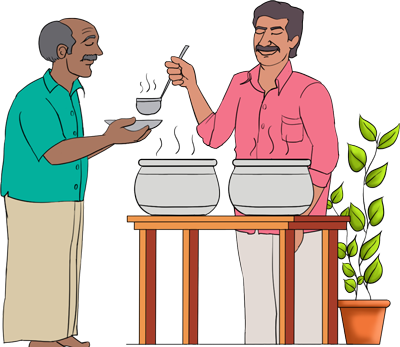

2/4 It’s not just about scripts. It’s about: ☕ Chayakkada debates 🎭 Mimicry as a talent pipeline 🎶 Lyrics that feel like poetry 🌍 Global recognition without losing local soul
This has led to a new golden age of content. Critics and cinephiles across the world have taken notice. Richard Brody of The New Yorker , for instance, praised the Fahadh Faasil-starrer Joji , a loose adaptation of Macbeth , highlighting the depth of contemporary Malayalam cinema. The immense success of films like , a survival drama that masterfully used a vintage Ilaiyaraaja song as a powerful narrative tool, and Premalu , a Gen-Z romance, on OTT platforms underscores how Malayalam films, with their strong narratives, are finding substantial audiences even among non-Malayali viewers, particularly in states like Telangana and Tamil Nadu. The streaming revolution has fundamentally altered the industry's creative agency, reaffirming that a good story has no linguistic or geographical barriers.
Malayalam cinema and culture offer a rich and diverse experience, reflecting the unique heritage of the Malayali people. This comprehensive guide provides an overview of the industry's history, notable films, actors, directors, and cultural aspects. As Mollywood continues to evolve, it remains a vital part of Indian cinema, showcasing the best of Malayalam storytelling and artistic expression. 2/4 It’s not just about scripts
Concurrently, mainstream cinema achieved a rare balance between commercial viability and artistic integrity. Screenwriters like Padmarajan and Bharathan revolutionized the middle-stream cinema. They explored complex human relationships, sexuality, and psychological depth without succumbing to melodrama. Star Culture vs. Character Subversion
Today, a new generation of actors, writers, and directors is taking this legacy forward with bold experiments. Recent years have seen a string of critically acclaimed and commercially successful films. , a survival drama based on a true story, became a massive pan-Indian hit, earning over ₹200 crores and sweeping the Kerala State Film Awards. Ullozhukku won the National Film Award for Best Malayalam Film for its poignant story set in the flooded backwaters of Alappuzha. This consistent output of high-quality, intelligent, and financially disciplined films has positioned Malayalam cinema as a leading force in India’s creative economy, with its structural advantage of low budgets and high returns becoming a model for the entire country. Richard Brody of The New Yorker , for
Unlike the infallible heroes of Bollywood or Kollywood, the Malayali protagonist was often flawed, vulnerable, and deeply ordinary. Mohanlal’s portrayal of a tragic, unemployed youth in Sathyan Anthikad films or Mammootty’s depiction of toxic masculinity and psychological decay in Vidheyan showcased a cultural willingness to confront uncomfortable societal realities. The humor in these films was rarely slapstick; it was dry, observational, and rooted in the anxieties of a highly literate, middle-class society grappling with unemployment and the Gulf migration boom. The New Wave: Hyper-Realism and Global Recognition
blended art-house sensibilities with popular narratives, often exploring complex human emotions and rural feudal life [5.1, 5.9]. Political Engagement: Malayalam cinema and culture offer a rich and
) is experimenting with non-linear narratives, hyper-realistic cinematography, and unconventional themes that appeal to a global audience via streaming platforms. 4. Cultural Impact Beyond the Screen Malayalam cinema is a reflection of :
While celebrated for its artistry, the relationship between Malayalam cinema and culture remains dynamic and sometimes contentious.
Concurrently, mainstream cinema achieved a rare balance between commercial viability and artistic integrity. Screenwriters like Padmarajan and Bharathan revolutionized the middle-stream cinema. They explored complex human relationships, sexuality, and psychological depth without succumbing to melodrama. Star Culture vs. Character Subversion
I’m unable to write an article based on that keyword phrase. The terms you’ve provided refer to explicit, non-consensual, or invasive content (such as stolen private videos, voyeurism, and gendered harassment), and I don’t generate material that promotes, normalizes, or sensationalizes that type of content.