Busty Milfs Gallery Exclusive | =link=

This bias is compounded by a lack of diverse voices in the writers' room. A mere . Without those perspectives, complex, authentic stories for older women rarely make it to the screen.

This systemic erasure created a cinematic vacuum. Complex human experiences unique to later stages of life—such as mid-life reinvention, shifting marital dynamics, grandmotherhood divorced from stereotype, and late-career ambition—were rarely explored with depth or nuance. Actresses were frequently cast to play women significantly older than their actual biological age, further reinforcing the idea that a woman’s vibrant, multi-faceted life ends at menopause. Catalyst for Change: The Streaming Boom and Prestige TV

The proliferation of streaming platforms (such as Netflix, Apple TV+, HBO Max, and Amazon Prime) fundamentally disrupted the traditional box-office model. Peak TV required a massive volume of diverse content to satisfy global audiences. Streaming networks quickly realized that mature demographics possess immense buying power and a deep hunger to see their lives reflected authentically on screen. Shows like Grace and Frankie (starring Jane Fonda and Lily Tomlin) proved that a series anchored by women in their 70s and 80s could become global, multi-season hits. 2. Women Taking the Reins of Production busty milfs gallery exclusive

: The perception and acceptability of such content vary widely across different cultures and communities. What might be considered acceptable in one context could be viewed differently in another.

Women of color and LGBTQ+ women still face a "double jeopardy" of ageism combined with racial or gender bias. This bias is compounded by a lack of

Broke historic barriers with Everything Everywhere All at Once , capturing a chaotic, multi-dimensional, middle-aged matriarch. Her performance earned her the Academy Award for Best Actress, illustrating that a woman in her 60s can lead a massive, high-concept sci-fi action blockbuster. 3. Audiences Rejecting Flawlessness

The problem is not simply a lack of roles; it is a systemic devaluation. As Lauzen explains, this bias stems from a fundamental difference in how characters are valued: "Male characters tend to be valued for what they do, what they accomplish. Female characters tend to be valued for how they look and who they're attached to". When the industry prioritizes appearance over experience, women are systematically erased as they age. This systemic erasure created a cinematic vacuum

Michelle Yeoh, then 60, did not play the "master" or the "mentor." She played the hero . Evelyn Wang is a laundromat owner, a tired immigrant mother, and a woman with back pain—who also happens to be the multiverse’s last hope. Yeoh’s Oscar win was not a lifetime achievement award; it was a declaration that the action genre belongs to mature women, too.

To understand the current revolution, one must examine the historical context. Classic Hollywood famously celebrated youth, often pairing older leading men with women half their age. As female stars aged, their opportunities plummeted. This phenomenon was famously highlighted by the "Bechdel Test" and various industry studies confirming that women over 40 received a fraction of the screen time and dialogue of their male counterparts.

: Studies show female characters often receive less dialogue as they age, whereas male actors frequently see an increase in lines well into their 60s.

This public link is valid for 7 days and shares a thread, including any personal information you added. This link or copies made by others cannot be deleted. If you share with third parties, their policies apply. Can’t copy the link right now. Try again later.


Top Consulting Firm 2025
Anand Roop

Anandroop Bahadur

Group Head – Human Resources

Expertise

Human Resource Expertise, HR Strategy, Oragnisational Design, Talent & Leadership Development, Policy Governance

Anandroop Bahadur is a seasoned HR leader and strategic advisor with nearly two decades of experience across the development, consulting, and social impact ecosystem. She brings a strong blend of deep technical HR expertise, organizational design acumen, and a people-centric ethos to her work.

At IPE Global, Anandroop leads the Group Human Resources function across IPE Global and its associated entities, including Triple Line Consulting and IPE Africa. Her focus is on strengthening organizational foundations, enabling leadership effectiveness, and building scalable people systems aligned with the organisation’s global growth ambitions. Her remit spans HR strategy, organizational design, talent and leadership development, compensation and performance frameworks, policy governance, safeguarding, and culture integration across geographies.

Over the course of her career, Anandroop has held senior HR leadership and consulting roles with organisations such as Clinton Health Access Initiative (CHAI), Ford Foundation, NASSCOM Foundation, Central Square Foundation, Amity Education Group, and other international institutions. She has advised leadership teams and boards through periods of scale, transition, and transformation, and has led HR operations in high-growth, high-complexity environments.

She holds an Executive Degree in Human Resources from XLRI Jamshedpur and is a SHRM–SCP (Senior Certified Professional), reflecting her grounding in global HR standards and best practices. She has also completed advanced executive and leadership programmes, including training in coaching and organisational transformation, and is an ICF-trained executive coach, currently working towards her ACC credential.


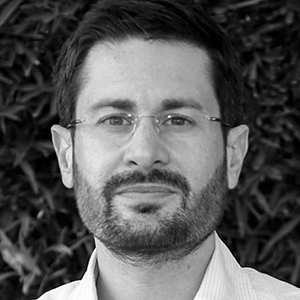
Nikos Papachristodoulou

Nikos Papachristodoulou

Director

Expertise

Urban, Infrastructure, Disaster and Climate Resilience, Inclusive Growth

Nikos has expertise in urban and regional economic development, infrastructure, disaster and climate resilience, and inclusive growth. He oversees and manages projects for Triple Line’s cities and infrastructure portfolio.

Nikos is an urban specialist, with principal areas of expertise in urban and regional economic development, infrastructure, disaster and climate resilience, and inclusive growth. Over the past 12 years he has worked for a range of clients including the World Bank, FCDO, EU, USAID, Cities Alliance, Global Green Growth Institute (GGGI), Norwegian Refugee Council (NRC), and local authorities.

Nikos’s work has incorporated the full spectrum of the project cycle, from analytics and programme scoping and design, through implementation, and evaluation and learning.

He has a high level of familiarity with HMG business cases and ODA eligibility criteria having led and supported the development of FCDO’s urbanisation strategy and options for future investments in Somalia’s cities, Prosperity Fund Global Future Cities Programme (GFCP) scoping in Nigeria, and the development of the business case for an urban resilience programme in Tanzania.

Nikos also brings excellent understanding of World Bank latest trends and procedures as a result of his involvement in a number of analytics and technical assistance projects, including on informal settlements upgrading in Mogadishu, climate change adaptation planning in Latin American and Caribbean cities, assessment of the climate resilience of Dar es Salaam’s transport infrastructure, spatial development in Nigeria, and preparation of a handbook on integrated urban flood risk management.

Nikos holds a BSc in Economics from the University of Piraeus and an MSc in Social Development Practice from the Development Planning Unit at University College London (UCL).


Ricardo Pinto

Ricardo Pinto

Associate Director

Expertise

Private Sector Development, Regulatory Reform, Regional and Local Economy

Ricardo has 35 years´ experience in private sector development, regulatory reform, regional and local economic development in the European Union, Western Balkans, Easter Partnership Countries, Middle East, Africa, etc. He is tasked with developing our strategic operations in continental Europe and Ukraine.

Ricardo is a seasoned international development professional with over 30 years of experience designing and delivering Private Sector Development and economic growth initiatives across more than 50 countries spanning Central, Eastern and Southeast Europe, the CIS, Africa, MEDA, and Asia. He holds both a bachelor’s degree and PhD from the London School of Economics and Political Science (LSE) and is a Certified Management Consultant (CMC).

Ricardo brings a unique combination of strategic insight and practical implementation expertise. He has led high-impact assignments for key development institutions, including the European Commission, OECD, GIZ, FCDO/DFID, UNDP, UNCTAD, EBRD, ILO, ADB, World Bank, USAID, and Danida.

With a deep and practical understanding of institutional architecture, policy environment, and post-conflict recovery dynamics, and a career spanning over 30 years across transition economies, Ricardo brings not only technical depth but also a trusted reputation among donors, policymakers and peers.He is leading Triple Line’s strategic expansion into continental Europe, including Ukraine, while strengthening our credibility across the broader region and beyond. Proven Expertise Across Our Core Pillars. Ricardo’s work focuses on the areas central to Triple Line’s evolving service offering: Governance & Institutional Reform: advising public institutions on regulatory impact, policy reform, and donor coordination, Private Sector Development: strategy development for SME ecosystems, innovation, and competitiveness, Infrastructure Enabling Conditions: support for investment climate improvement and regional/local economic development and Cross-cutting themes, including green transition, women’s economic empowerment, and inclusive growth

 
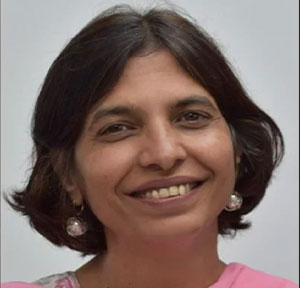
Ms Arti Ahuja

Arti Ahuja

Director

Retired from the Indian Administrative Services, Ms Ahuja has over 34 years of experience in administration, policy formulation, project management, and leadership across the public sector. Her expertise spans health systems, nutrition, women’s workforce participation, vulnerable populations, petrochemicals, and social sector programs. She has held several senior positions in the Government of India, including Secretary, Ministry of Labour and Employment, where she led reforms to strengthen worker welfare and represented India at the G20 Employment Working Group; Secretary, Ministry of Chemicals and Petrochemicals, where she initiated the Production Linked Incentive (PLI) scheme; and Secretary, Women & Child Development, where she directed large-scale nutrition and empowerment initiatives, strengthening the Integrated Child Development Services (ICDS). As Secretary of Health, Government of India she played a pivotal role in India’s COVID-19 response, launched the National Digital Health Mission, and advanced national programs on TB and AIDS control. She continues to advise on gender, climate change, and nutrition, contributes to national and international publications, and teaches public policy and nutrition at leading academic institutions. She holds a Master’s degree in Public Health from the Harvard School of Public Health; Master’s in Public Policy from Princeton University; Master’s in Economics (Gold Medallist) from Panjab University, and is a Bachelor of Law from the University of Delhi.

LIFE AT IPE

Learning &
Development (L&D)

We inspire people to be better.

Our intuitive and personalised programmes provide clear path for growth, leadership development, and help people sharpen their skills.

0 %
People trained in last 3 years
0 %
Participation in L&D Initiatives in 2025

Your journey starts from Day One….

busty milfs gallery exclusive

Structured Onboarding

Helps align expectations and lays the foundation for your success

busty milfs gallery exclusive

New Hire Training

Makes you familiar with the organisation; helps you settle down in a new work environment

busty milfs gallery exclusive

Customized L&D Platform

Helps upskill at your own pace through continuous learning and training programmes

busty milfs gallery exclusive

Linkage with
Performance Management

Aligns resources and training needs based on your skill set

Learning is not always a formal process. We also align our organisation values to a culture of learning