VSDX to OBJHow to UseTool OptionsFile InformationFAQOther VSDX ToolsLatest News
to

Autocad 2010 ((better)) Guide

Use our free and fast online tool to convert your VSDX (Microsoft Visio) image or logo into 3D OBJ (Wavefront) mesh/model files suitable for printing with a 3D printer or for loading into your favorite 3D editing package.

How to Convert your VSDX to OBJ Online?

Here are three simple steps to create an OBJ file from a VSDX file.

Upload a VSDX

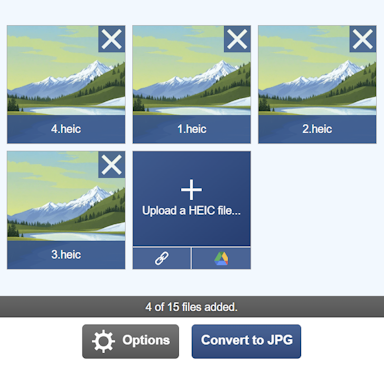
Click the "Upload a File" button and select VSDX to upload. The maximum file size is 100MB.

Select your Options

Set the dimensions and other options, and click the "Convert to OBJ" button to convert your VSDX to OBJ.

Download your OBJ File

Click the download link once completed to receive your OBJ file.

Autocad 2010 ((better)) Guide

The Ribbon interface debuted in 2009, and everyone hated it (change is scary!). But by 2010, Autodesk fixed it.

For electrical SLDs, P&IDs, or landscape architecture, the 2D tools in 2010 are 95% identical to the 2025 version. You don't need "Collaboration" or "Drive" features to draw a line.

AutoCAD 2010 is a foundational version of Autodesk's computer-aided design and drafting software, widely used by architects, engineers, and designers for creating precise 2D and 3D technical drawings. Core Commands & Functionality

For years, the inability to import PDFs natively into AutoCAD was a major pain point. AutoCAD 2010 finally addressed this with revolutionary PDF enhancements, which remains one of the most valued features of the release. Autocad 2010

in the history of computer-aided design software by Autodesk. Released in March 2009, this version introduced groundbreaking parametric drawing capabilities, sophisticated 3D free-form mesh modeling tools, and a heavily refined ribbon user interface. These advancements fundamentally altered how architects, engineers, and designers approached digital drafting and physical product visualization. Core Structural and Interface Enhancements

: You could tell two lines to always stay parallel or perpendicular.

: Apply rules like "Parallel," "Perpendicular," or "Tangent" to lines and curves. Auto Constrain : Found in the Parametric tab The Ribbon interface debuted in 2009, and everyone

: Common keyboard shortcuts like Ctrl+S (Save), Ctrl+O (Open), and Ctrl+Q (Exit) streamline the workflow. Working with Text

: Fundamental tools include LINE , CIRCLE , RECTANGLE , and ARC for creating shapes, and ERASE for removal.

Few releases in the history of CAD software have left as lasting a mark as AutoCAD 2010. Released on March 23, 2009, under the internal development codename "Gator," AutoCAD 2010 was far more than a routine annual update. It was a landmark release that fundamentally reshaped how designers work, introducing features that remain essential in modern CAD workflows. A productivity study commissioned by Autodesk found that the new features in AutoCAD 2010 could deliver up to for common design and documentation tasks. You don't need "Collaboration" or "Drive" features to

When Autodesk released AutoCAD 2010 in March 2009, the CAD world held its breath. This wasn't just another annual update. Coming after the controversial but innovative 2009 release (which introduced the ribbon menu), AutoCAD 2010 had the monumental task of stabilizing new UI paradigms while pushing the boundaries of 3D modeling and PDF integration. Today, looking back from an era dominated by subscriptions and cloud-based collaboration, AutoCAD 2010 stands as a landmark release—a bridge between the "Classic" toolbar-driven drafting and the parametric, free-form modeling of the modern era.

Arguably the crown jewel of the 2010 release was the introduction of parametric drawing tools. Before this, if you wanted to change the length of a part, you had to manually adjust all associated lines and arcs, hoping you didn't miss one. AutoCAD 2010 changed this with and Dimensional constraints.


File Format Information for VSDX to OBJ

ExtensionVSDX
Full NameMicrosoft Visio
TypeVector
Mime Typeapplication/octet-stream
FormatBinary
ToolsVSDX Converters, VSDX Viewer
Open WithInkscape

Description

The VSDX format is the official file format used by Microsoft Visio, an application specializing in creating floor plans, flow charts, organization charts, and other vector-based charts.

The format has been around since the early 1990s, and like other Microsoft applications, VSDX files have evolved over the years. VSDX files can be opened in Microsoft Visio, and many other vector-based programs offer support for importing VSDX files for editing.

Description

The OBJ file format, originally created by Wavefront Technologies and later adopted by many other 3D software vendors, is a simple text-based file format for describing 3D models/geometry. This data can include vertices, faces, normals, texture coordinates, and references to external texture files.

As the format is text-based, it is relatively straightforward to parse in 3D modeling applications. A downside of the text-based format is that the files can be rather large compared to similar binary formats such as STL and compressed files such as 3MF.

OBJ Notes

Our tool will save any material and texture files separately; these additional files will be included with your final OBJ file at the time of download.

Supported Features

  • Mesh geometry
  • Materials (Via an MTL file)
  • Textures (PNG, JPG, TGA formats)

Frequently Asked Questions

Will the OBJ file retain the textures from my VSDX file?

Yes! If your VSDX file contains textured geometry, the texture image files along with the texture coordinates (UV data) will be exported with the final OBJ file.

How can I convert my VSDX file to OBJ?

First click the "Upload..." button, and select your VSDX file to upload. You can also drag and drop your file onto the tool. Once your file is selected, you can set any configuration options. When the VSDX to OBJ conversion has completed, you can download your OBJ file straight away.

How long does it take to convert my VSDX to OBJ?

We aim to process all VSDX to OBJ conversions as quickly as possible, this usually takes around 5 seconds but can be more for larger more complex files so please be patient.

How accurate is the VSDX to OBJ conversion?

We aim to create the most accurate conversions with our tools. Our tools are under constant development with new features and improvements being added every week.

Is it safe to convert my VSDX to OBJ on ImageToStl.com?

Yes, of course! We do not store the VSDX file you submit to us. The resulting OBJ file, once created, is stored for 4 hours after upload; after this time it is deleted, and the short-term download link will stop working. You can create a long-term download Url with most tools that will ensure the file is retained for 24 hours, allowing you to download the file when convenient. Our tools also come with a Delete button, allowing you to delete the file immediately.

Do I need a high-spec. computer to use the VSDX to OBJ converter?

No. All our conversion tools process your VSDX file on our dedicated conversion servers, meaning you can use our tools on low-spec computers, laptops, tablets, and mobile devices and receive your converted OBJ file quickly.

Can I convert my VSDX to OBJ on Windows, Linux, Android, iOS or Mac OS?

Yes! Our VSDX to OBJ tool will run on any system with a modern web browser. No specialist software is needed to run any of our conversion tools.

What if I am using an Ad Blocker, will that affect things?

Yes. Although you can use an Ad Blocker, if you like our VSDX conversion tool please consider white-listing our website. When an Ad Blocker is enabled there are some conversion limits and some settings may not be available when using our tools. Processing/conversion and download times will also be longer.

Can I get support with converting my VSDX to OBJ?

Yes. When you have converted your VSDX to OBJ, there is a "Feedback" option that you can use to let us know of any issues you encountered when converting your file.

© 2026 ImageToStl. Convert your PNG and JPG Files to 3D STL files.